





Working at height safely and efficiently depends on choosing the right type of aerial work platform (AWP), also known as a MEWP (Mobile Elevating Work Platform). Each lift type has its own structure, height capability, and ideal applications.
This guide gives you a quick but complete overview of the main types of aerial work platforms and how to select the right one for your job.
Comparison Table: Choosing the Right Aerial Work Platform for Your Job
| Scissor Lift | Vertical lifting with cross-braced structure | - High lifting capacity - Stable and spacious platform - Ideal for indoor use | - Limited to vertical movement - Requires flat surface | Warehouses, factories, indoor maintenance, construction |
| Boom Lift (Telescopic) | Extendable straight arm for long reach | - Excellent horizontal outreach - Great for outdoor and rough terrain | - Higher cost - Larger footprint | Building façades, bridges, outdoor maintenance |
| Articulating Boom Lift | Multiple hinged arms for flexible reach | - Can reach over obstacles - High versatility | - Slower operation - Lower weight capacity than telescopic | Tree trimming, electrical work, confined spaces |
| Trailer-Mounted Lift (Towable Boom Lift) | Portable, towable by vehicles | - Easy to transport - Lower cost than self-propelled lifts | - Requires towing vehicle - Slower setup | Building cleaning, light installation, small contractors |
| Spider Lift (Crawler Lift) | Compact lift with crawler tracks | - Works on uneven or soft ground - Narrow access capability | - Expensive - Slower movement | Churches, atriums, outdoor terrain, tree care |
| Vertical Mast Lift (Personnel Lift) | Compact single-column design | - Lightweight and easy to move - Perfect for one-person jobs | - Small platform - Lower height reach | Indoor maintenance, warehouse picking |
| Self-Propelled Lift | Moves under its own power | - No towing needed - Increases efficiency | - Higher cost - Needs charging/maintenance | Construction sites, industrial facilities |
| Aluminum Alloy Lift | Lightweight aluminum frame | - Corrosion-resistant - Easy to transport | - Lower weight capacity - Less stable outdoors | Indoor cleaning, electrical work, light maintenance |
| Crawler Scissor Lift | Scissor lift on crawler chassis | - Handles rough terrain - Stable on uneven ground | - Slower speed - More maintenance | Outdoor construction, slope areas |
| Manual Lift (Push-Around Lift) | Operated manually, moved by hand | - Low cost - Easy to maintain | - Requires manual movement - Limited height | Small workshops, indoor repair tasks |
Learn more about different MEWP categories and safety requirements
1. Scissor Lifts – The Vertical Specialist
Scissor lifts move straight up and down using a cross-brace lifting mechanism.
Typical Uses:
Indoor maintenance, ceiling work, and electrical installation
Warehouse stock management and equipment servicing
Advantages:
Large, stable work platform
High load capacity for workers and tools
Available in electric (indoor) or diesel (outdoor) versions
Limitations:
No horizontal outreach
Best on firm, flat surfaces
✅ Ideal for indoor or flat-surface vertical work.
2. Articulating Boom Lifts – For Hard-to-Reach Areas
Articulating booms (knuckle booms) have multiple joints that let you reach up and over obstacles.
Typical Uses:
Building maintenance, painting, tree trimming
Accessing confined or obstructed areas
Advantages:
Exceptional flexibility and maneuverability
Compact base suitable for tight sites
Limitations:
Lower platform capacity than scissor lifts
Requires operator training
✅ Perfect for maintenance and access around obstacles.
3. Telescopic Boom Lifts – Maximum Height and Reach
Telescopic booms extend in a straight line, offering the greatest horizontal reach and working height.
Typical Uses:
Construction, bridge inspection, wind turbine servicing
Advantages:
Long outreach and fast positioning
Works well on rough outdoor terrain
Limitations:
Large footprint, not ideal for confined areas
✅ Best for high-reach outdoor construction and inspection work.
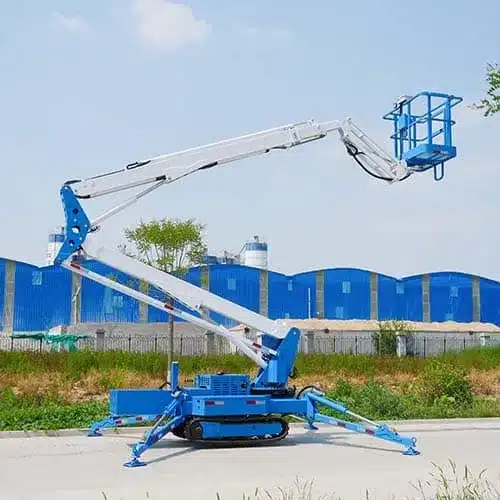
4. Spider Lifts – Lightweight and Ground-Friendly
Spider lifts use tracks and extendable legs, allowing them to operate safely on uneven or delicate surfaces.
Typical Uses:
Indoor building maintenance, tree care, or narrow access areas
Advantages:
Very light, low ground pressure
Can handle slopes and tight entry points
Limitations:
Smaller platform and slower movement
✅ Excellent for uneven terrain or sensitive flooring.
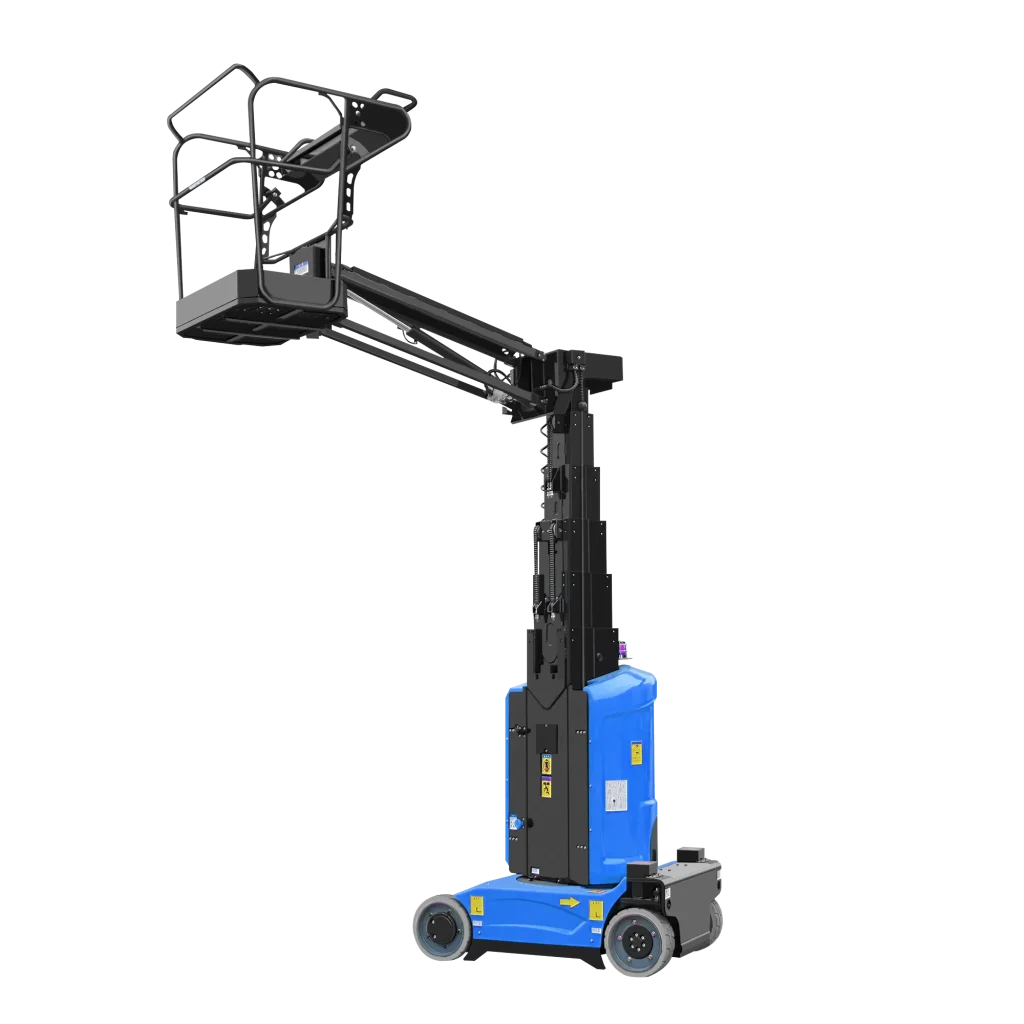
5. Vertical Mast Lifts – Compact and Efficient Indoors
Vertical mast lifts are slim, single-operator platforms for confined indoor spaces.
Typical Uses:
Retail, airport, or library maintenance
Light installation and inspection
Advantages:
Fits through standard doors
Quiet, electric, and easy to operate
Limitations:
Lower height and capacity
✅ Ideal for one-person indoor maintenance tasks.
6. Trailer-Mounted Lifts – Portable and Cost-Effective
Trailer-mounted boom lifts can be towed between multiple job sites easily.
Typical Uses:
Outdoor signage, lighting, or short-term rental work
Advantages:
Easy transport and quick setup
Affordable and versatile
Limitations:
Requires towing and flat ground
✅ Great for contractors working across multiple locations.
7. Self-Propelled Lifts – Built for Productivity
Self-propelled lifts can drive while elevated, saving time on large jobs.
Typical Uses:
Warehouses, logistics centers, or construction sites
Advantages:
Move without lowering the platform
Improves efficiency and reduces downtime
Limitations:
Higher cost and maintenance needs
✅ Best for large-scale, continuous-use environments.
8. Safety and Compliance
Regardless of type, all aerial lifts must meet Work at Height Regulations and IPAF training standards.
Always ensure:
- Operators are trained and certified
- Equipment is inspected before each use
- Fall protection is in place
- Emergency plans are prepared
Safety should always come before speed.
9. Choosing the Right Lift
When deciding which lift to use, consider:
- Height and reach needed
- Ground conditions (flat or uneven)
- Space limitations
- Indoor or outdoor use
- Load capacity and power source
Quick recommendations:
- Indoor maintenance → Scissor or mast lift
- Construction / outdoor → Telescopic or articulating boom lift
- Uneven ground → Spider lift
- Multi-site work → Trailer-mounted lift
Find out how to choose the right cherry picker for your project.Whether you’re conducting repairs or setting up a large event, a cherry picker can be the key to elevating your project. At LEMAX, we design and manufacture reliable, high-performance cherry pickers built for safety and efficiency. Contact us today to find the perfect lifting solution for your next project.