



Working at height has always been one of the most demanding and risky operations in industrial, construction, and maintenance environments. To make these tasks safer and more efficient, Mobile Elevating Work Platforms (MEWPs) have become an essential tool. This guide explains the main types of MEWPs, their technical differences, and how to choose the right one for your application — from factory maintenance to large-scale outdoor projects.
What Is a MEWP?
A Mobile Elevating Work Platform (MEWP) is a powered machine designed to lift personnel, tools, and materials to elevated positions for temporary work.
Unlike static scaffolding or ladders, a MEWP offers:
- Mobility – it can be repositioned quickly.
- Safety – equipped with guardrails, sensors, and overload protection.
- Efficiency – allows operators to reach complex work areas with minimal setup time.
MEWPs are classified according to their lifting mechanisms, reach, and mobility type, each suited for different tasks and working environments.
Main Types of MEWPs
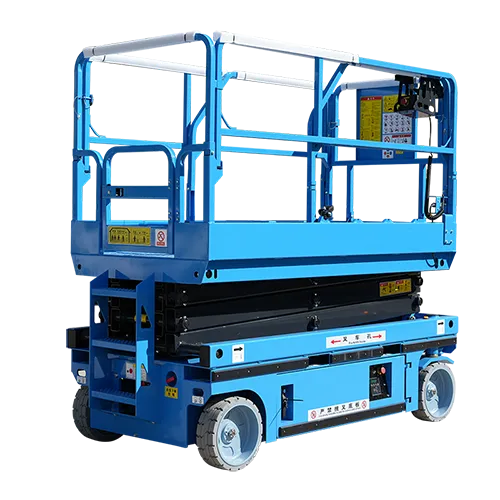
Self-Propelled Scissor Lift
1. Scissor Lifts
Mechanism:
Scissor lifts use a criss-cross “X” mechanism powered by a hydraulic or electric system. The platform moves vertically, maintaining stability and load capacity.
Technical Highlights:
- Platform height: 6–18 meters
- Load capacity: up to 1,000 kg
- Suitable for: indoor maintenance, warehouses, and factory installations
- Power source: battery or diesel (for outdoor models)
Advantages:
- High lifting capacity
- Large working platform
- Excellent vertical stability
Limitations:
- Limited horizontal reach
- Requires firm and level ground
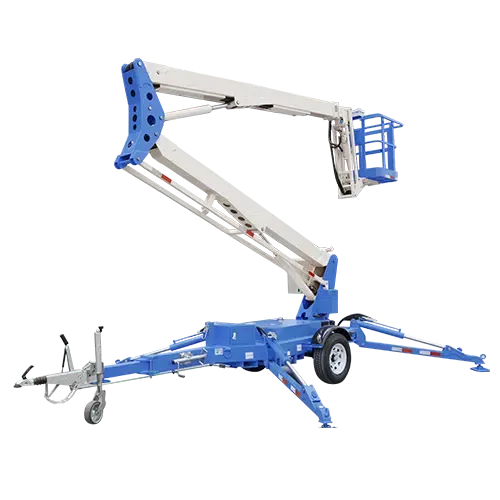
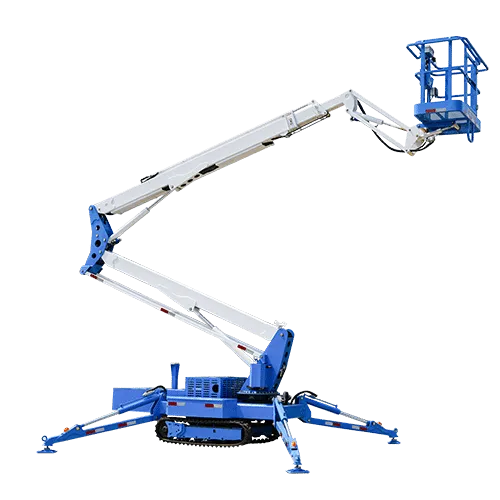
2. Articulating Boom Lifts (Knuckle Booms)
Mechanism:
Articulating boom lifts have multiple jointed arms that can bend around obstacles. The boom’s flexibility allows operators to reach areas that are otherwise difficult to access.
Technical Highlights:
- Working height: up to 40 meters
- Horizontal outreach: 10–20 meters
- Power: electric (indoor) or diesel (outdoor)
- Rotation: 360° continuous or limited slew
Best For:
Maintenance around buildings, installation in tight areas, tree trimming, or electrical line repairs.
Advantages:
- Exceptional flexibility
- Can operate above or around obstacles
- Compact when stowed
Limitations:
- Lower lifting capacity than scissor lifts
- Complex structure = higher maintenance cost
3. Telescopic Boom Lifts (Stick Booms)
Mechanism:
Telescopic booms feature straight, extendable sections that slide out for maximum outreach and height.
Technical Highlights:
- Maximum height: 60 meters or more
- Horizontal outreach: up to 25 meters
- Power: typically diesel
- Ideal for: outdoor construction, shipyards, and large maintenance projects
Advantages:
- Longest reach among all MEWPs
- Fast lifting speed
- Excellent for rough outdoor environments
Limitations:
- Larger footprint
- Requires experienced operators
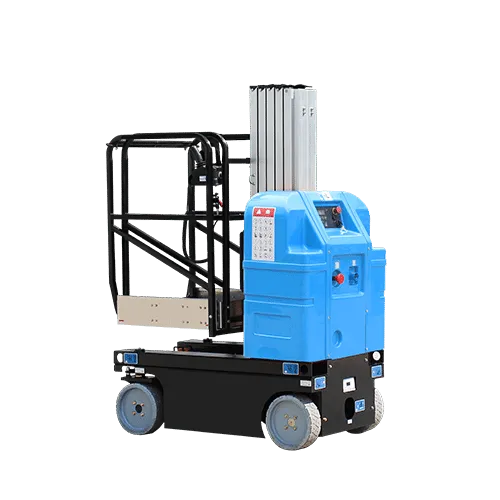
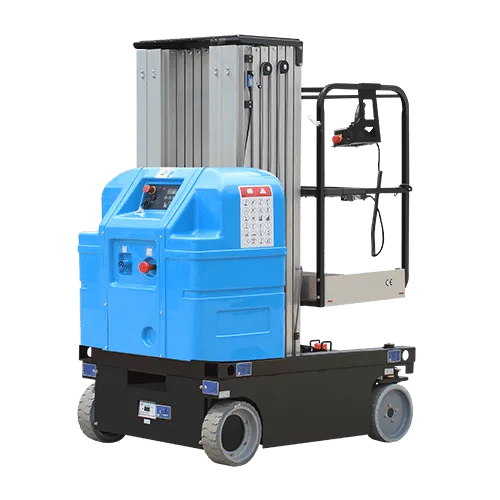
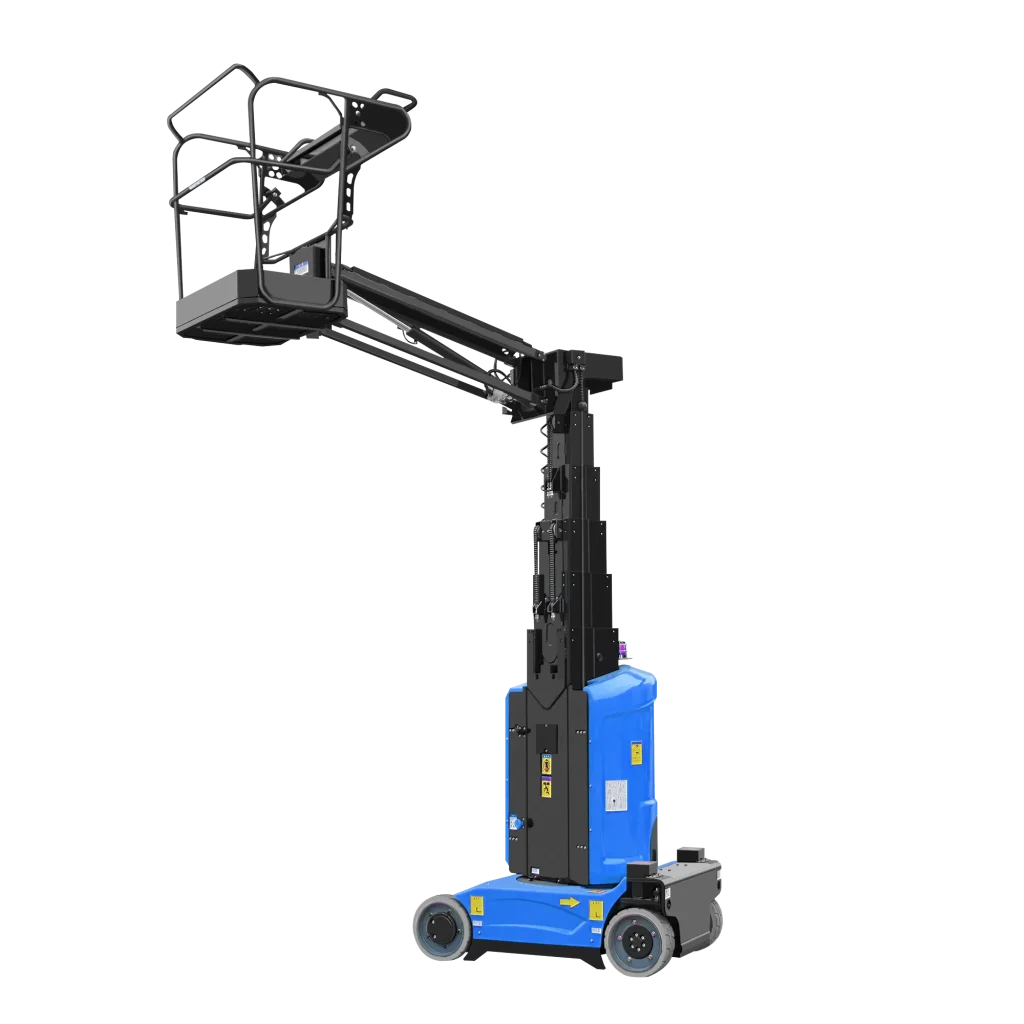
4. Vertical Mast Lifts (Personnel Lifts)

Mechanism:
A vertical mast lift a small platform for one person. These units are compact and lightweight, ideal for tight indoor spaces.
Technical Highlights:
- Platform height: up to 10 meters
- Load capacity: 120–200 kg
- Power: electric
- Typical use: facility management, lighting maintenance, signage installation
Advantages:
- Compact size and easy transportation
- Quick setup
- Cost-effective
Limitations:
- Limited platform space
- Restricted to flat, smooth floors
5. Push-Around MEWPs
Mechanism:
These are manually moved, small lifts powered by an electric actuator or hydraulic pump. Operators push them to the working location before elevating.
Technical Highlights:
- Height: 5–14 meters
- Load: up to 150 kg
- Lightweight and affordable
Advantages:
- Simple and easy to use
- No need for powered drive
- Perfect for short-duration indoor jobs
Limitations:
- Manual repositioning
- Not suitable for frequent relocation or uneven ground
Key Technical Considerations When Choosing a MEWP
Choosing the right MEWP involves more than just height. Engineers and safety managers should consider:
Factor Description
- Working Height Maximum elevation required for the task
- Horizontal Outreach Distance to reach over obstacles
- Load Capacity Combined weight of operator, tools, and materials
- Power Source Electric for indoors, diesel for outdoor or long runtime
- Terrain Conditions Smooth indoor floors vs uneven outdoor ground
- Safety Features Tilt sensors, overload alarms, emergency descent systems
- Maintenance Requirements Hydraulic oil replacement, battery service, inspections
Lemax Technical Expertise and Advantages
- At Lemax, we specialize in the design, manufacturing, and customization of MEWPs for global clients.
Our product range includes scissor lifts, articulated boom lifts, telescopic booms, and vertical mast lifts, designed for reliability and safety under international standards. - Technical Advantages:
- CE and ISO certified hydraulic systems
- High-efficiency battery and control modules
- Rigid structural steel frames with anti-corrosion treatment
- Custom platform sizes and lifting capacities available
- After-Sales Support:
- Global parts supply
- Remote technical consultation
- On-site maintenance training