





In today’s industrial world, efficiency and safety are paramount. Whether in logistics, manufacturing, assembly, or vehicle maintenance, hydraulic scissor lift platforms play a vital, behind-the-scenes role in ensuring operations run smoothly.
Key Components and Structure
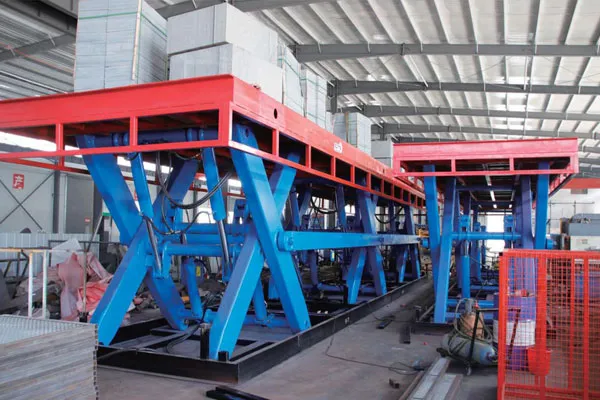
Hydraulic scissor lifts comprise five core components, each with its unique “personality” and design considerations:
Platform — Work Surface
This is the surface of the lift that directly bears the load.
Customization: Length and width depend on cargo dimensions and weight.
Surface Treatment: Optional checkered plate or anti-slip texture ensures safety.
Additional Features: Safety rails, extension boards, or powered rollers enhance platform versatility.
Scissor Arms—The Platform's Pillars
The signature crossed arms give this lift its name. By extending and retracting, they raise and lower the platform.
Material: Typically made of high-strength alloy steel for durability.
Design Options: Single-stage, double-stage, or multi-stage scissor lifts, depending on required lifting height.
Hydraulic Cylinders—The Muscle
These are the true “powerhouses.” Pressurized hydraulic fluid drives the piston, opening the scissor arms and lifting the platform.
Configuration: Can be single-cylinder, dual-cylinder, or multi-cylinder.
Stroke and Diameter: These directly impact load capacity and lifting range.
Seals: High-quality seals prevent leaks and ensure long-term stability.
Power Unit—The Heart
Without a powerful heart, the lift platform cannot operate. The power unit includes the motor, pump, reservoir, and control valves.
Power Source: Optional three-phase/single-phase AC, DC battery power, or even pneumatic motors for explosion-proof environments.
Voltage: Must comply with local standards (e.g., 380V in China, 480V/240V in the U.S.).
Base - Foundation
The base supports the entire structure and provides guide rails for the scissor arm ends.
Installation: Can be installed in a pit (flush with the ground) or at ground level.
Strength: A sturdy base enhances overall stability and torsional resistance.
Working Principle: Hydraulic Principle
Lifting Process
When the “Up” button is pressed, the motor drives the hydraulic pump, forcing oil pressure into the lower chamber of the cylinder. The piston rod extends, forcing the scissor arms to open and lift the platform.
A check valve prevents oil backflow, meaning the platform remains locked at any height even if the pump stops.
Lowering Process
To lower, the operator activates the solenoid valve. The valve opens, allowing hydraulic fluid to flow back to the reservoir through a throttle valve. Gravity (the load’s own weight) then smoothly lowers the platform.
The throttle valve ensures speed control, preventing sudden drops whether the lift is fully loaded or empty.
The safety valve remains closed by default, preventing free-fall even during power failure.
Types, Applications, and Safety Guidelines
Common Types of Scissor Lifts
Fixed Scissor Lift Platform – Permanently mounted at a workstation, ideal for loading docks or production lines.
Mobile Scissor Lifts – Equipped with wheels for flexible movement between work areas.
Self-Propelled Scissor Lifts – Independently mobile, often used for elevated work with guardrails.
Articulated Scissor Lifts – Feature a special joint design to operate over obstacles.
Typical Applications
Warehousing & Logistics: Truck loading/unloading, shelf picking.
Production Lines: Material transfer between workstations at different heights.
Auto Repair: Used as vehicle lifts.
Stages & Events: Raising scenery, props, or platforms.
Safety Best Practices
Daily Inspection: Check oil levels, leaks, and structural integrity.
Never Overload: Overloading is the primary cause of accidents and equipment damage.
Load Evenly: Position cargo centrally to avoid imbalance.
Stay Safe: Never work beneath a raised platform without the safety lock engaged.
Regular Maintenance: Replace hydraulic fluid and filters, and tighten bolts as per instructions.
Conclusion
Hydraulic scissor lifts may not be the most glamorous industrial equipment, but they are undoubtedly among the most reliable and indispensable. Understanding their structure, operating principles, and safety standards helps ensure they will serve your operations effectively for years to come.
If you are considering which model to choose or require a customized solution, please feel free to contact us.
Technical Support: [email protected]
You may also leave a message on our website detailing your requirements—our engineers will recommend the perfect lifting solution tailored to your needs.